
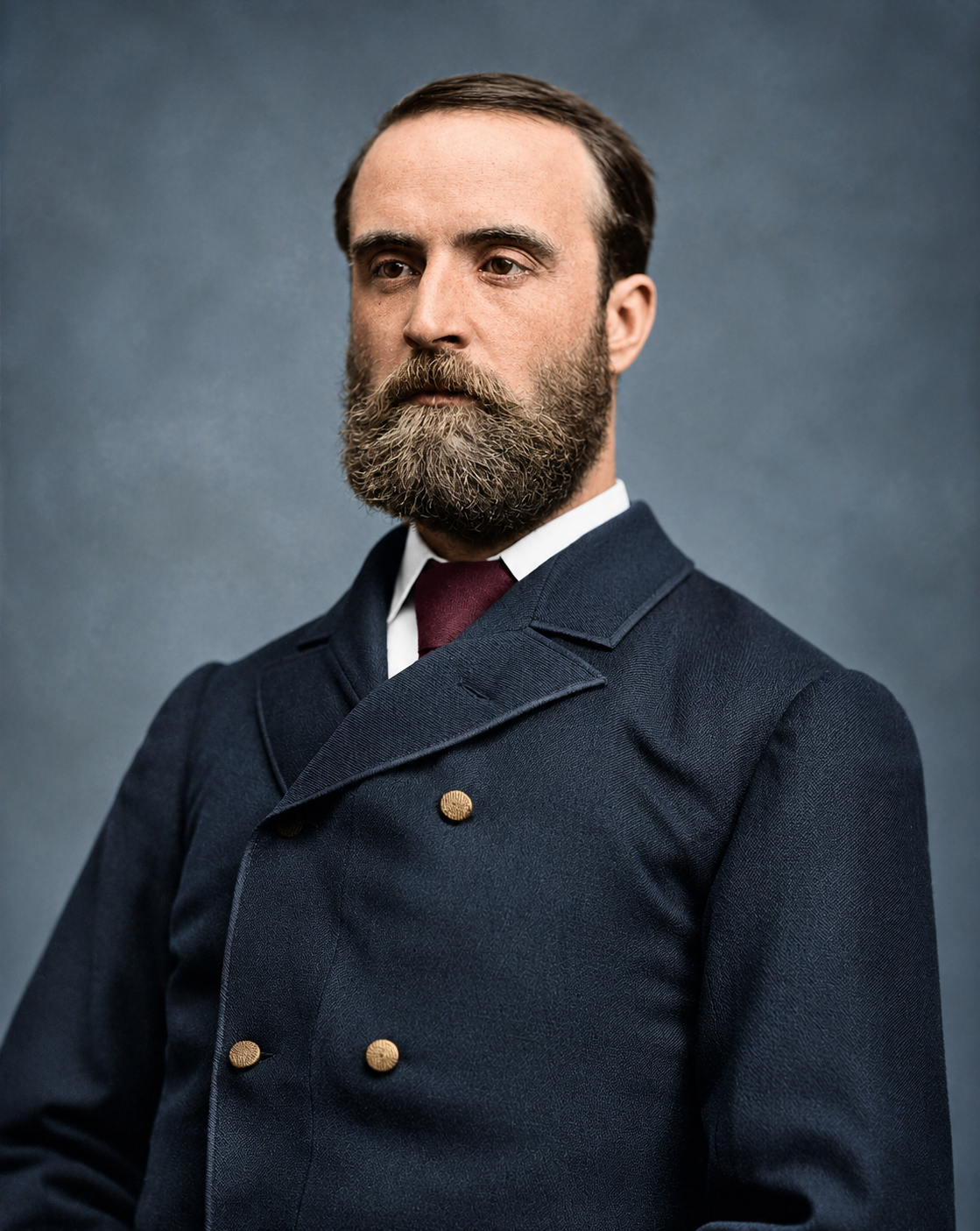
In the spring of 1889, Charles Stewart Parnell commanded unrivaled authority in British and Irish politics. When the leader of the Irish Parliamentary Party entered the House of Commons on March 1 of that year, members of Parliament rose to their feet in a rare standing ovation after he survived one of the most audacious political smear campaigns in modern history. Yet within two years, this champion of Irish Home Rule was politically ruined and buried in Glasnevin Cemetery at the age of forty-five, leaving his party shattered behind him.
For Irish Americans, whose financial generosity and political muscle through organizations like Clan na Gael and the Irish National Land League funded Parnell’s rise, his destruction remains one of history’s great tragedies. Parnell was not defeated at the ballot box or by the superior arguments of his opponents. Instead, a coordinated alliance of British establishment politicians and conservative journalists, aided by opportunistic traitors within his own ranks, resorted to forged documents and a contrived divorce scandal to destroy him.
From County Wicklow to the “New Departure”
Born in 1846 into a wealthy Protestant landowning family in County Wicklow, Parnell seemed an unlikely champion for Catholic tenant farmers. His background offered few hints of rebellion. Yet, influenced by his American mother, Delia Tudor Stewart—the daughter of Rear Admiral Charles Stewart, who commanded the U.S.S. Constitution (“Old Ironsides”) in the War of 1812 and harbored a deep hostility toward British rule—Parnell entered Parliament in 1875 determined to force Westminster to address Irish grievances. Alongside Joseph Biggar, he pioneered parliamentary obstructionism, using the House of Commons’ own rules to deliver lengthy speeches that brought British legislative business to a standstill and forced favorable concessions for Ireland.
Parnell’s genius lay in his ability to unite the rival factions of Irish nationalism. Through the “New Departure” of 1878 and 1879, he forged a working alliance across the historic divide between constitutional parliamentarians at Westminster and John Devoy’s Fenian movement across the Atlantic. As president of the Irish National Land League, he championed non-violent social ostracization, urging tenants to shun anyone who took over the farm of an evicted neighbor—a tactic that gave the English language the word “boycott,” named after land agent Captain Charles Boycott in County Mayo.
By 1885, Parnell commanded a disciplined bloc of 85 Irish members of Parliament, holding the balance of power at Westminster. He used that political leverage to compel British Prime Minister William Gladstone and the Liberal Party to support Irish Home Rule. For British Unionists and the Conservative government of Lord Salisbury, Parnell had become a mortal threat to the British Empire. Unable to defeat him through legitimate politics, his enemies turned to underhanded methods. Westminster trembled.
“Parnellism and Crime”: The Pigott Forgery Plot
The first major plot began in the pages of The Times of London. In March and April 1887, the newspaper published a series of articles titled “Parnellism and Crime,” attempting to link the Irish Home Rule movement to agrarian terrorism. It was a lie. On April 18, the exact day Parliament debated a harsh new coercion bill for Ireland, The Times printed a copy of a letter allegedly signed by Parnell. Dated nine days after the 1882 Phoenix Park Murders—in which the Irish National Invincibles assassinated British officials Lord Frederick Cavendish and Thomas Henry Burke—the letter implied that Parnell secretly condoned Burke’s death.
Parnell immediately denounced the document in the House of Commons as a villainous forgery and demanded an inquiry. The Conservative government established a Special Commission of three judges in an attempt to implicate the entire Irish nationalist movement in criminal activity. That scheme collapsed in February 1889 when Parnell’s brilliant Irish counsel, Sir Charles Russell, cross-examined Richard Pigott, the disreputable Dublin journalist who had sold the letters to The Times.
Russell’s cross-examination was masterful. Asking Pigott to write down several words dictated from the courtroom floor, including “likelihood” and “hesitancy,” Russell watched Pigott misspell the latter as “hesitency”—matching the exact spelling error found in the forged letter. Broken on the witness stand, Pigott confessed to the forgery and fled to Madrid, where he took his own life in a hotel room before the arrival of the Spanish police. The Times subsequently paid Parnell £5,000 in libel damages.
The Katharine O’Shea Divorce Scandal
Yet even as Parnell celebrated his triumph over Pigott, a second, far more dangerous plot was developing. Since 1880, Parnell had been involved in a devoted, long-term relationship with Katharine O’Shea, the estranged wife of Captain William Henry O’Shea, a nominal Home Rule member of Parliament. Parnell and Katharine lived together near London and raised three children. Captain O’Shea was fully aware of the affair from its earliest days, yet he tolerated it for nearly a decade to serve his own ambitions without raising a single public objection.
O’Shea used Parnell to extract political favors, acting as an intermediary during the 1882 Kilmainham Treaty negotiations and forcing Parnell to back his candidacy in an 1886 Galway by-election, despite the outrage of Parnell’s top lieutenants. More importantly, O’Shea was waiting for Katharine’s wealthy aunt, then in her nineties, to pass away, hoping to secure a share of a massive inheritance.
When the aunt died in May 1889 and left her fortune in trust exclusively for Katharine, O’Shea’s financial patience ended. On Christmas Eve 1889, spurred on by Conservative Unionist politician Joseph Chamberlain—who saw an opportunity to destroy Home Rule where Pigott had failed—O’Shea filed a petition for divorce in London’s Probate, Divorce and Admiralty Division, naming Parnell as co-respondent.
When the uncontested divorce trial opened in November 1890, Captain O’Shea cast himself as a betrayed and wronged husband. Facts did not matter. The British press eagerly printed salacious, often fabricated courtroom testimony, spreading false tales of Parnell fleeing down a fire escape to avoid detection. Because Parnell refused to contest the suit so that he could finally marry Katharine, the public heard only O’Shea’s version of events.
Victorian Hypocrisy and the Committee Room 15 Split
The moral outrage was steeped in Victorian hypocrisy. Captain O’Shea was himself a serial adulterer who had tolerated the affair for years to advance his political career, filing for divorce only when a family inheritance failed to materialize. Prime Minister Gladstone had previously used Katharine as an emissary to Parnell. Across London, the very politicians, aristocrats, and press barons leading the chorus of condemnation routinely kept discreet mistresses of their own. Even the heir to the throne, Edward, Prince of Wales, maintained a string of high-profile affairs while remaining entirely shielded by the British establishment. Under the era’s unwritten code, private infidelity was tolerated among the elite; Parnell’s real offense was allowing his private life to become public.
The political fallout was swift and severe. Gladstone issued an ultimatum to the Irish Party to remove Parnell, declaring privately to Justin McCarthy that Parnell’s continuance in the leadership would render Gladstone’s retention of the Liberal leadership “almost a nullity.” In Ireland, the Catholic hierarchy condemned Parnell on moral grounds.
In December 1890, during bitter debates in Committee Room 15 at Westminster, the Irish Parliamentary Party split in two. Forty-four members walked out to form an anti-Parnellite faction, leaving only twenty-eight loyalists behind their chief. Former allies turned viciously against him, led by Timothy Healy, who attacked Parnell daily in the press and accused him of financial embezzlement because he knew Parnell would not sue for libel.
Parnell’s Final Campaign and Legacy
Refusing to surrender the independence of the Irish party to British political dictates, Parnell began a grueling tour across Ireland to win back the people. Hostile crowds met him at every turn, hurling insults about Katharine, whom he would finally marry in a register office in Steyning in June 1891. During a chaotic political rally in Castlecomer in December 1890, opponents even threw quicklime at his face. Exhausted and suffering from severe illness, Parnell returned to Brighton, where he died in Katharine’s arms on October 6, 1891. He was forty-five.
More than 200,000 people lined the streets of Dublin for his funeral, a silent tribute to the man who had brought Ireland to the very threshold of self-rule. Parnell’s personal choices left him vulnerable, yet his destruction required a sustained campaign of forged documents and financial blackmail backed by Ireland’s enemies. For members of the Ancient Order of Hibernians, we must make it a duty to remember both the power of Irish unity and the lengths to which adversaries have always gone to divide us as a people.
Neil F. Cosgrove, Division Historian
© 2026 Neil F. Cosgrove. Originally published in the Division 3 Ancient Order of Hibernians newsletter.